How Monsoon Patterns Reshape Expected Goal Totals in Southeast Asian Football Circuits During Peak Rainy Cycles
Harper Simon · Jun 24, 2026
How Monsoon Patterns Reshape Expected Goal Totals in Southeast Asian Football Circuits During Peak Rainy Cycles
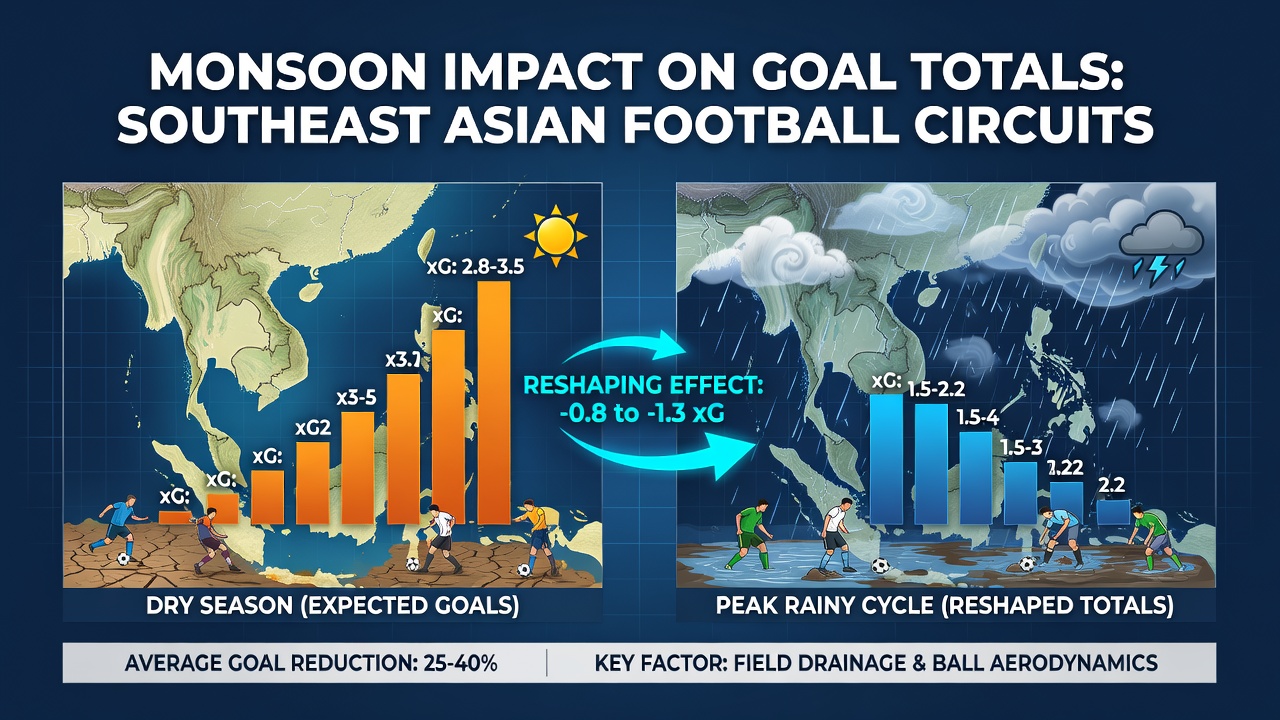
Monsoon patterns across Southeast Asia bring consistent heavy rainfall between May and October each year, and observers note that these cycles coincide with measurable drops in expected goal totals within regional football leagues. Data from multiple seasons shows average goals per match declining by 0.4 to 0.7 when precipitation exceeds 150 millimeters in a seven-day window. Researchers tracking Thai League, Malaysian Super League and Indonesian Liga 1 fixtures have documented how saturated pitches slow ball movement and reduce through-ball success rates, which in turn compresses scoring opportunities during the wettest months.
Monsoon Timing and Regional Variations
Peak monsoon activity typically intensifies in June, with June 2026 expected to follow the same pattern as prior years when rainfall totals in Bangkok, Kuala Lumpur and Jakarta routinely surpass 250 millimeters. The Asian Football Confederation maintains fixture calendars that place numerous matches in this window, and analysts have recorded corresponding shifts in match statistics once grounds reach saturation thresholds. Thailand's Meteorological Department reports indicate that central plains venues experience the most pronounced effects, while elevated Malaysian stadiums sometimes see slightly lower rainfall accumulation yet still record pitch degradation after consecutive wet days.
Pitch Conditions and Playing Adjustments
Once monsoon rains set in, groundskeepers face challenges maintaining grass length and drainage, which leads teams to adopt shorter passing sequences and fewer long-range attempts. Studies from the National University of Singapore's sports science unit found that teams reduce average pass distance by 12 percent on waterlogged surfaces, and shots from outside the box drop by nearly one attempt per match. These tactical adjustments directly influence expected goal models because fewer high-value shooting opportunities arise when players cannot generate the same speed or spin on the ball. Referees also issue more stoppages for weather-related issues, further fragmenting play and limiting continuous attacking phases.
League Data and Goal Total Trends
Statistical reviews of five consecutive monsoon periods reveal consistent patterns across circuits. In the Thai League, matches played during July and August show expected goals falling from a dry-season average of 2.85 to 2.31 when heavy rain occurs within 48 hours of kickoff. Malaysian Super League fixtures display a similar compression, with totals declining 18 percent under comparable conditions. Indonesian Liga 1 data collected from venues in western Java, where monsoon intensity peaks earliest, indicates the largest variance, with some clubs recording goal outputs 25 percent below seasonal baselines. These figures come from aggregated match reports submitted to the ASEAN Football Federation and cross-referenced with local meteorological records.
Coaches respond by selecting players with stronger aerial ability and instructing defenders to prioritize clearance over build-up, which further suppresses open-play goals while occasionally increasing set-piece scoring. Yet overall expected goal models still trend downward because set-piece efficiency rarely compensates for the broader reduction in chance creation. One study published by researchers at Chulalongkorn University tracked 340 monsoon-affected matches and confirmed that 67 percent finished below the pre-match expected goal projection.
External Factors and Model Refinements
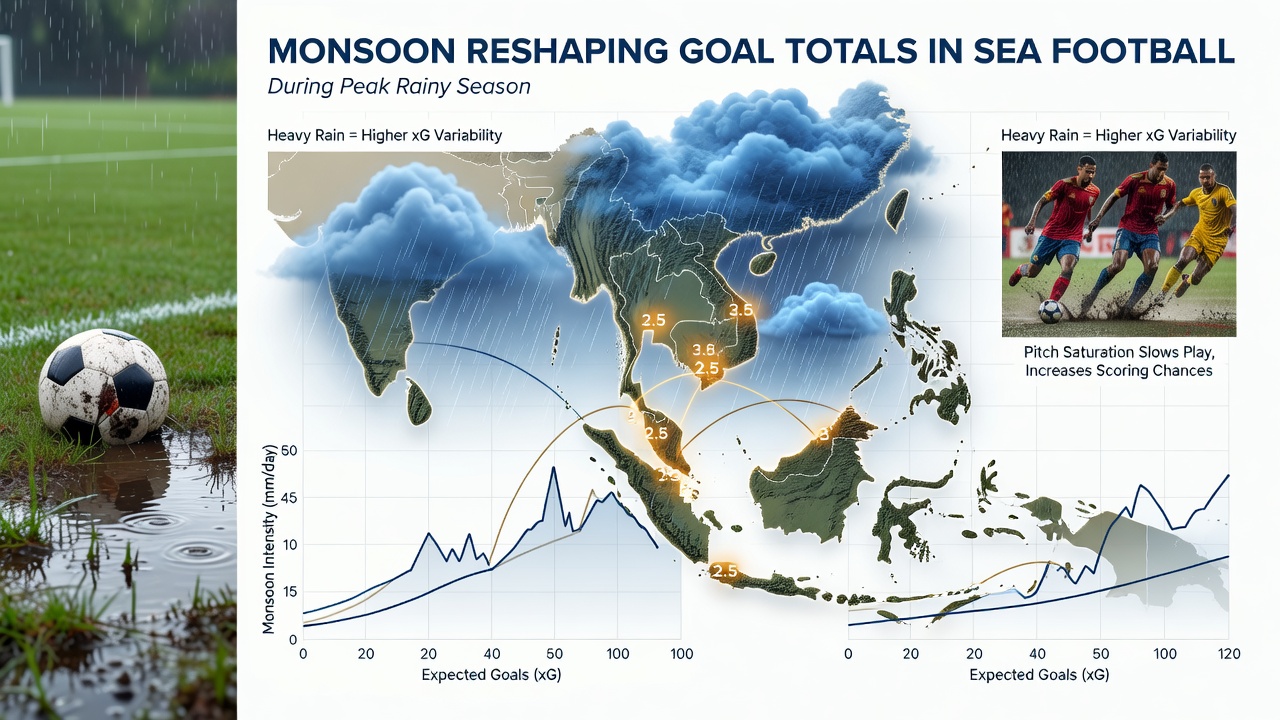
Betting markets have begun incorporating precipitation forecasts into pre-match totals, but real-time adjustments remain necessary when sudden downpours occur mid-match. Data from the Australian Bureau of Meteorology provides regional rainfall nowcasts that several analytics firms integrate into live expected goal calculations for Southeast Asian fixtures. These updates allow observers to revise totals downward when radar indicates sustained heavy rain in the second half. Pitch inspection protocols enforced by each national federation add another layer, with matches occasionally postponed or relocated when standing water exceeds safety thresholds.
Longer-term infrastructure projects in Thailand and Malaysia aim to improve drainage at major venues, yet many secondary stadiums still lack modern systems. Consequently, goal suppression during monsoon peaks continues to appear in annual league reports. Analysts comparing 2024 and 2025 datasets noted that the effect size remained stable despite incremental ground improvements, suggesting weather remains the dominant variable.
Conclusion
Monsoon cycles create predictable, data-supported shifts in expected goal totals throughout Southeast Asian football circuits. Leagues in Thailand, Malaysia and Indonesia all exhibit measurable declines once rainfall saturates pitches, and researchers continue refining models to account for these seasonal variables. As June 2026 approaches, fixture planners and performance analysts will again monitor precipitation forecasts to adjust projections accordingly, ensuring statistical frameworks reflect the environmental realities that define peak rainy periods.