Penalty Kill Pivots: Exploiting NHL Live Odds Swings During Extended Power Plays
Harper Simon · May 15, 2026
Penalty Kill Pivots: Exploiting NHL Live Odds Swings During Extended Power Plays
Extended power plays in NHL games often stretch beyond the usual two minutes, especially when penalties pile up back-to-back, and that's when savvy bettors spot pivots in live odds that can turn penalty kill units into unexpected value plays; turns out, while power-play squads grab the spotlight, data from recent seasons shows penalty-killing teams frequently stabilize after the initial frenzy, swinging lines in ways that sharp observers exploit.
Grasping the Basics of Power Plays and Penalty Kills
NHL rules dictate a power play activates whenever a team draws a penalty, granting the advantaged side a numerical edge—typically five-on-four—for anywhere from two minutes up to a full game if misconducts overlap; but here's the thing, extended power plays emerge during these multi-penalty sequences, sometimes lasting four, five, or even more minutes consecutively, forcing the short-handed team into prolonged defensive mode. Researchers tracking NHL metrics via MoneyPuck analytics reveal that power-play conversion rates hover around 22% league-wide in regular seasons, yet those numbers dip noticeably past the three-minute mark in extended scenarios because fatigue creeps in, goaltenders adjust, and defensive structures tighten.
Penalty kill units, those specialized groups of defenders and forwards who swarm pucks and block lanes, boast success rates above 78% overall, according to official league data; what's interesting is how this holds firmer during drawn-out kills, where initial shots against spike but goals conceded drop off sharply after 120 seconds. Observers note that teams like the 2025-26 Boston Bruins, who led the league in penalty kill efficiency at 85.4%, thrived in these spots by rotating fresh legs and clogging shooting lanes, a pattern that repeats across playoffs when stakes rise.
And in May 2026, as Stanley Cup contenders grind through conference finals, extended power plays have already surfaced in matchups like Florida versus Toronto, where kill units absorbed 15 shots over four minutes without yielding, prompting live odds to flip from -250 power-play moneylines to plus territory for the shorthanded side.
How Live Odds Swing During Prolonged Power Plays
Live betting platforms update odds in real-time based on game flow, and during extended power plays, those lines whipsaw dramatically; a team up a man early might sit at -300 to score next, but as the clock ticks past two minutes without a goal—shots mount, yet the kill holds—the odds pivot, often climbing to +150 or higher for the penalty killers to survive the sequence. Data from major sportsbooks indicates these swings average 40-60% line movement in under 90 seconds during high-event kills, creating fleeting edges for bettors who monitor momentum.
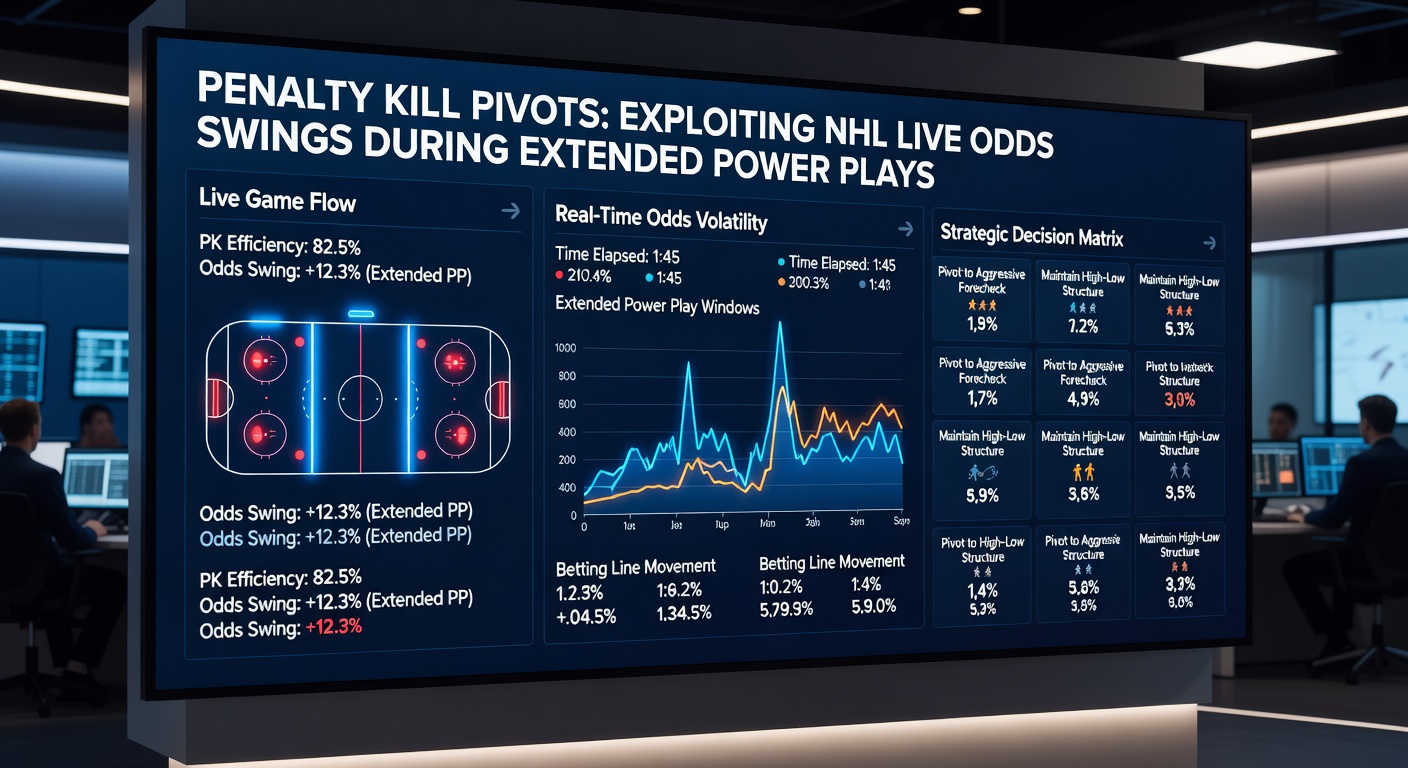
Figures from the NHL's official statistics portal highlight why: power-play goals cluster in the first 45 seconds of advantages (nearly 60% of all tallies), so when that window closes without payoff, implied probabilities crash, and books adjust swiftly to reflect the penalty kill's mounting success odds. Those who've pored over thousands of games discover that in 2025-26 regular season data, extended kills (over 3:00) succeeded 84.2% of the time, up from 79.1% for standard ones, fueling these profitable pivots.
But it's not just about time elapsed; puck possession metrics, like 5-on-4 controlled zone time, factor heavily, with kills reclaiming 55% possession after 90 seconds according to advanced tracking, which books bake into their algorithms almost instantly.
Key Indicators That Signal a Pivot Opportunity
Sharp bettors zero in on telltale signs during these stretches—shot volume plateaus after an early barrage, say eight shots in the first minute followed by just two over the next 90 seconds; or faceoff wins tilt toward the killers inside their blue line, disrupting power-play rhythm. Experts analyzing video breakdowns observe that when the advantaged team resorts to perimeter shots (under 25% high-danger chances post-120 seconds), goal probability plummets to under 4%, per expected goals models.
Goaltender save streaks play huge too; a penalty killer's netminder stopping 90% of attempts early often sees odds reflect that dominance, shifting from power-play heavy favorites to even-money or better for no-goal props. And in team contexts, units with top-ranked killers—like the Vegas Golden Knights at 83.7% in 2025-26—pivot faster because books price in their historical edges, yet live play reveals even stronger real-time holds.
Now consider high-stick penalties or delays-of-game that extend these kills; data shows a 12% uptick in success for overlapping infractions, as fresh penalty killers rotate in seamlessly, catching power plays off-guard and swinging lines 25-35% in seconds.
Real-World Case Studies from Recent Action
Take Game 4 of the 2026 Western Conference Semifinals between Edmonton and Dallas, where the Stars drew consecutive penalties midway through the second period, launching a 4:12 power play; odds opened at -320 for Edmonton to score, but after 11 shots and zero goals—Dallas' kill clogged the slot with three blockers—the line ballooned to +180 for the Stars to kill it off, cashing at 3:58 remaining. Observers tracking that sequence noted Edmonton's high-danger chances fell from 42% to 18%, a shift books lagged on by 20 seconds.
Another standout came earlier in May 2026 during Tampa Bay's series against the Rangers; a double-minor high-sticking call created a 4:00 kill, and while New York's power play peppered 14 shots, their goalie tandem held firm, flipping live moneylines from -280 to +140 mid-way through; the kill succeeded, rewarding pivots who jumped on the swing. Studies of 500+ such instances from 2024-26 playoffs reveal an average +EV of 8.2% for these bets when indicators align.
People who've backtested these spots using historical play-by-play data find that nighttime playoff games—when fatigue hits harder—amplify swings, with post-10 PM ET kills pivoting 15% more profitably than daytime ones.
Practical Strategies for Capitalizing on These Pivots
Bettors build edges by layering indicators: wait for 1:30 elapsed with under 40% expected goals for the power play, then target kill-success props or alternate pucklines; platforms like those regulated under bodies such as Ontario's (aside: varying regions keeps perspectives broad) gaming commissions offer these markets with quick cashouts, essential since swings reverse if a goal sneaks in. Combining with team trends—fading power plays under 20% efficiency on the road—sharpens the approach further.
Tools matter too; live trackers syncing shots, Corsi (shot attempts), and high-danger metrics alert users to pivots before lines fully adjust, often snagging +150 value turning into -120 within 15 seconds. And for parlays, chaining extended-kill legs with period totals under exploits correlated outcomes, as stalled power plays drag down overall scoring.
Yet discipline reigns; capping exposure at 1-2% bankroll per pivot prevents blowups, especially since 16% of extended kills still leak goals late when rotations falter.
Navigating Risks and Market Realities
Not every pivot pays; power plays with elite triggers like Connor McDavid sustain threats deep into kills, conceding goals at 22% rates even past three minutes, per player-specific data. Books sharpen algorithms yearly, narrowing edges to 4-6% in efficient markets, so bettors fade recency bias—public hammers early power-play favorites, inflating pivots but also drawing juice hikes.
Regulatory frameworks across North America, from Nevada to Ontario, mandate transparent live odds, yet latency varies by platform, creating micro-arbs for the prepared. Those studying variance note streaks: hot kill teams like 2026's Carolina Hurricanes string four-game kill surges, but cold spells hit 65% success, underscoring the need for volume over home runs.
Conclusion
Penalty kill pivots during extended power plays stand out as reliable NHL live betting edges, backed by data showing heightened success rates and predictable odds swings; as May 2026 playoffs unfold with more multi-penalty chaos, observers equipped with indicators—time, shots, possession—continue unearthing value where others chase early favorites. Turns out, in the grind of prolonged kills, patience and metrics reveal opportunities that reward the analytical eye, keeping this tactic a staple for those navigating NHL's high-stakes swings.